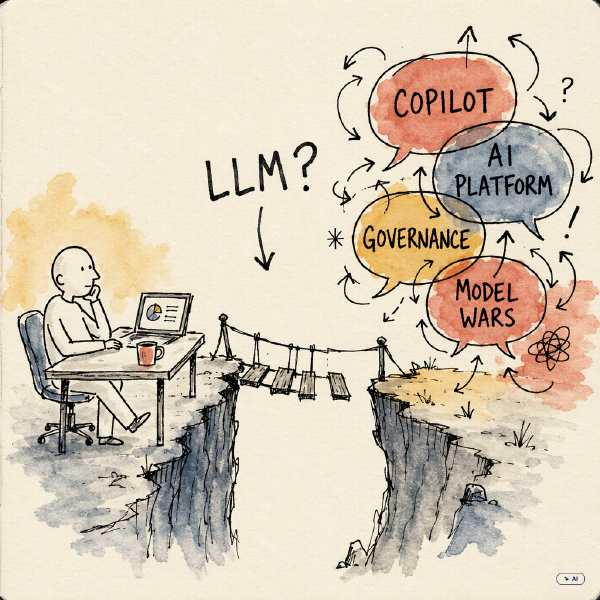

I just went through the slides of an old Gartner keynote about the digital workplace. “Old” is a big word here, since it is from 2024, but in technology terms that is already close to retirement age.
I did not attend the talk, and the slides are graphically simple. So this is my interpretation of the slides, not a summary of what was said on stage.
One slide stood out. It lists what leaders should take away: see the danger of only dealing with the problems in front of you, and support the ambitions for AI and distributed work. Other slides talk about everyday AI, productivity gains and new ways of working.
That sounds reasonable. Until you think about what “the problems in front of you” look like in daily life.
A workplace leader may be expected to help shape the company’s AI-enabled future and also make sure people can join a meeting, find the right collaboration tool, and get through the day without discovering a new and creative interpretation of “digital friction”.
This was already a broad job description, and it keeps getting broader. The expectations around AI and transformation are rising, while the basic workplace still has to work reliably. And let’s be honest, it fights that expectation at every corner. Ambition does not remove operational work. It just gives it more ambitious neighbours.
Neither side can be ignored. Focusing only on immediate issues keeps the organisation permanently reactive. Focusing only on transformation builds an impressive future on top of an unreliable present. Bandwidth, access, information architecture, and support may not sound strategic, but they are what make strategy usable.
So workplace leaders have to work on two horizons: keeping today’s workplace running while helping to design tomorrow’s. They need to work with IT, HR, facilities and business leaders, often without full control over any of them. The slides call facilities, HR and business leaders “core allies” for workplace modernisation.
It is a difficult job, and the difficulty is easy to underestimate because success is often invisible. When everything works, nobody writes a case study about the perfectly uneventful video call.
So while we talk about AI ambitions and the future of work, think of the people who connect those ambitions to everyday reality. They carry both strategy and operations, and preferably keep the Wi-Fi working while doing so.
This one is my thank you to all of you.